Department of Hotel Management Facilities

Basic Training Restaurant
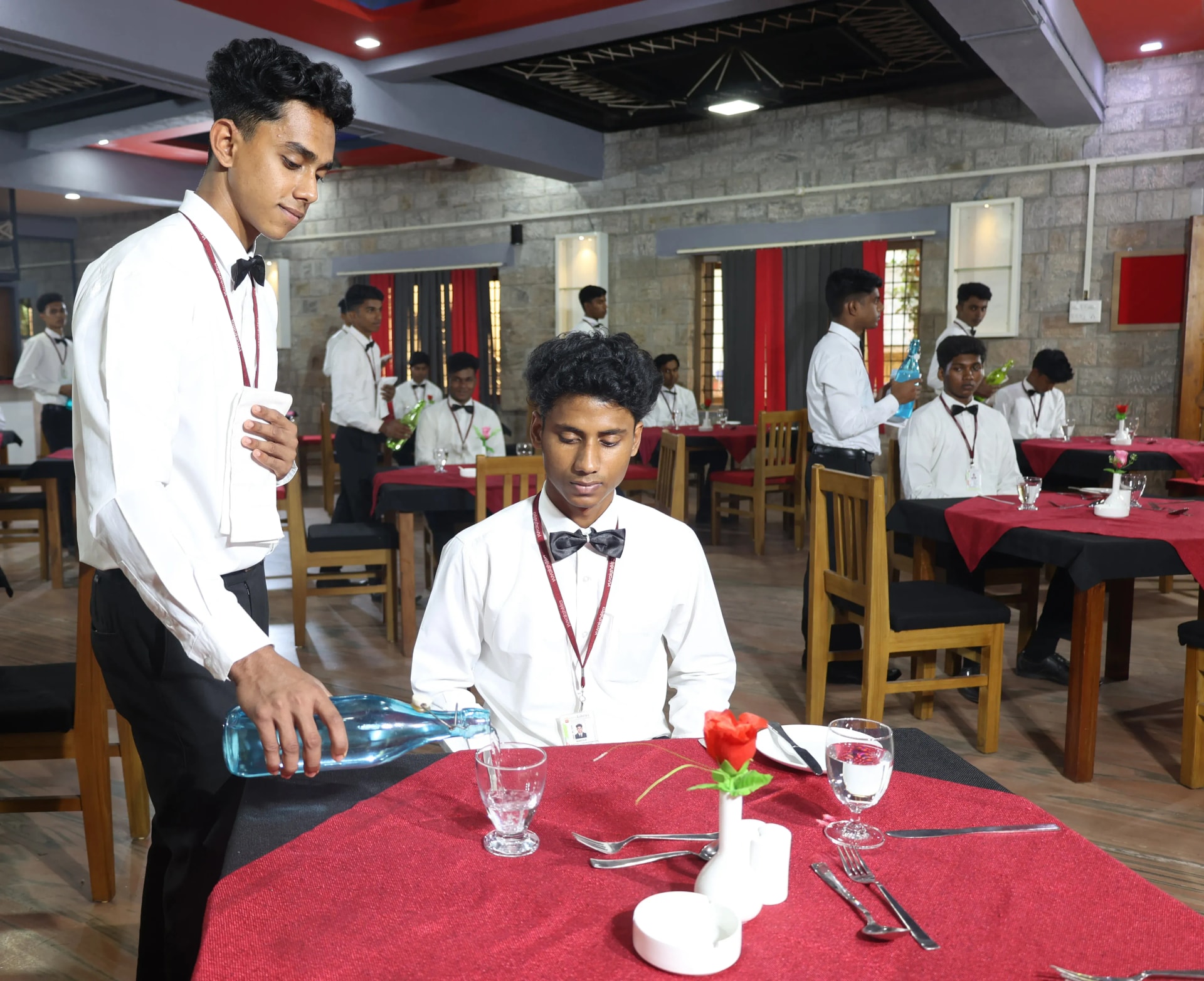
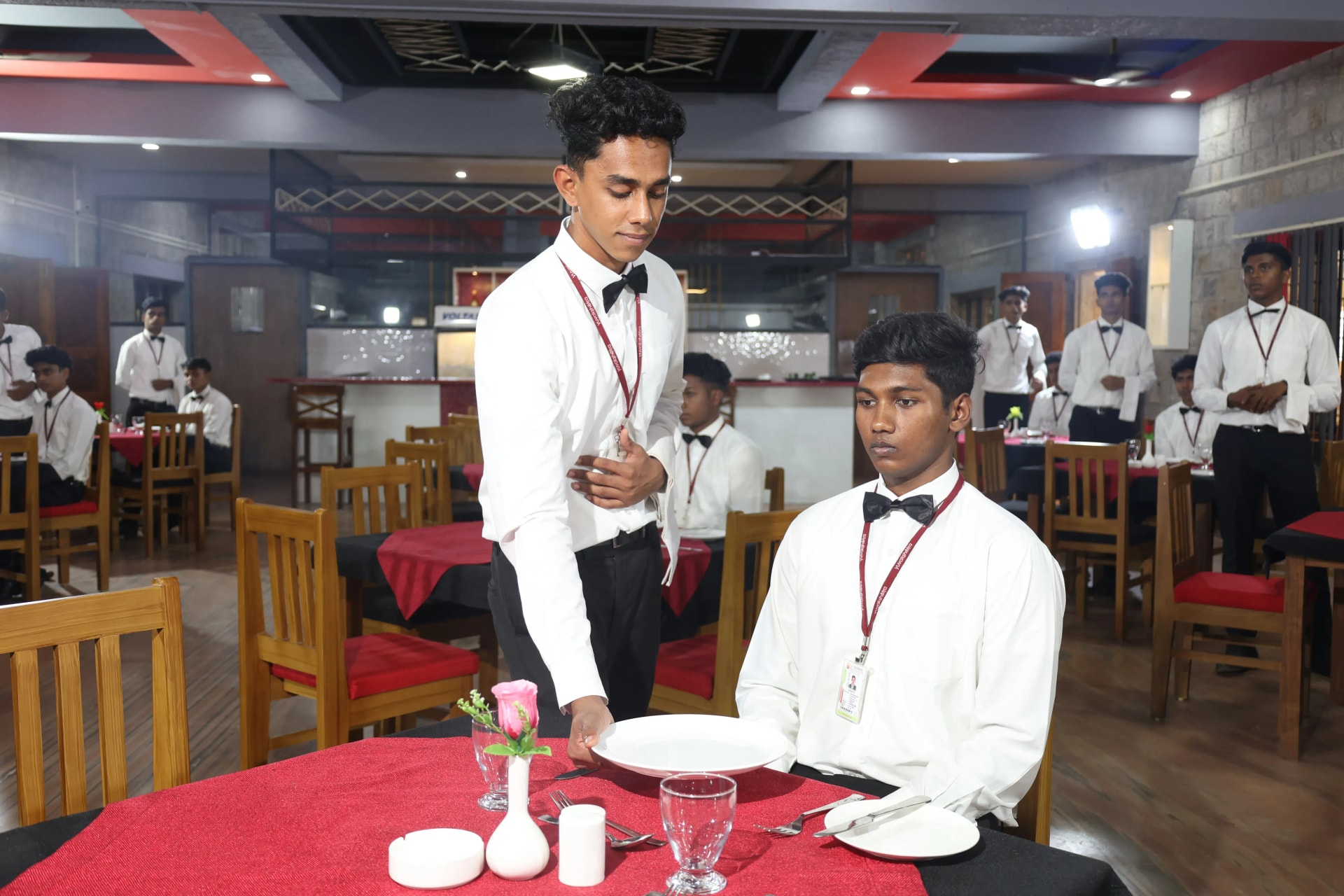
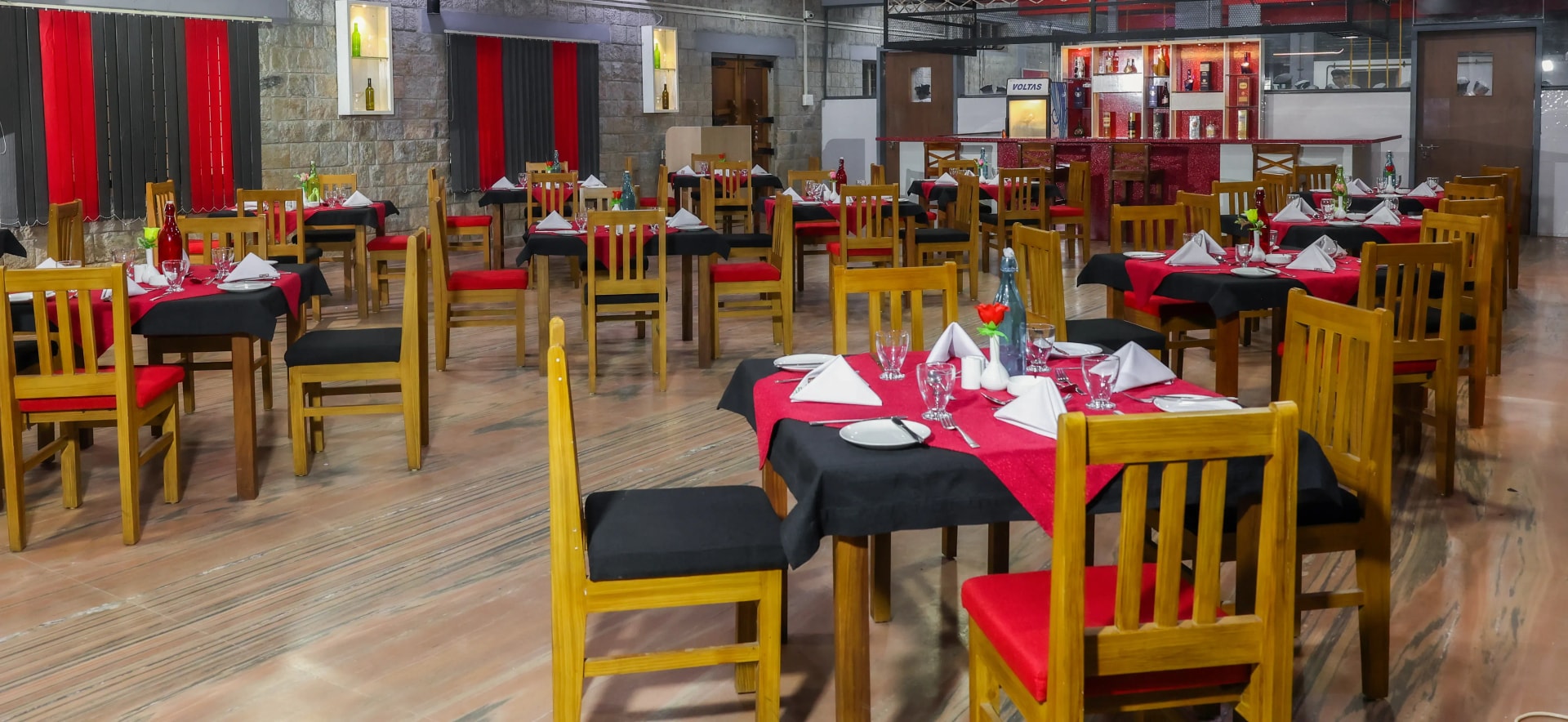
The Basic Training Restaurant at the department is more than a practical classroom—it is a space where students step into the role of hospitality professionals and experience firsthand the rhythm of restaurant operations. Designed as a 48-cover fine-dining facility, the restaurant replicates the ambiance and structure of a functioning hotel dining room, offering students a close-up view of what service excellence truly involves.
Every corner of the space has been thoughtfully laid out to mirror the flow and detail expected in industry-standard establishments. A fully functional bar counter stands ready for beverage training, while a gueridon trolley is used to practice the intricacies of tableside service—skills that demand both technique and poise. An LCD screen forms part of the infrastructure, supporting demonstrations and interactive learning in real time, enhancing both observation and participation.
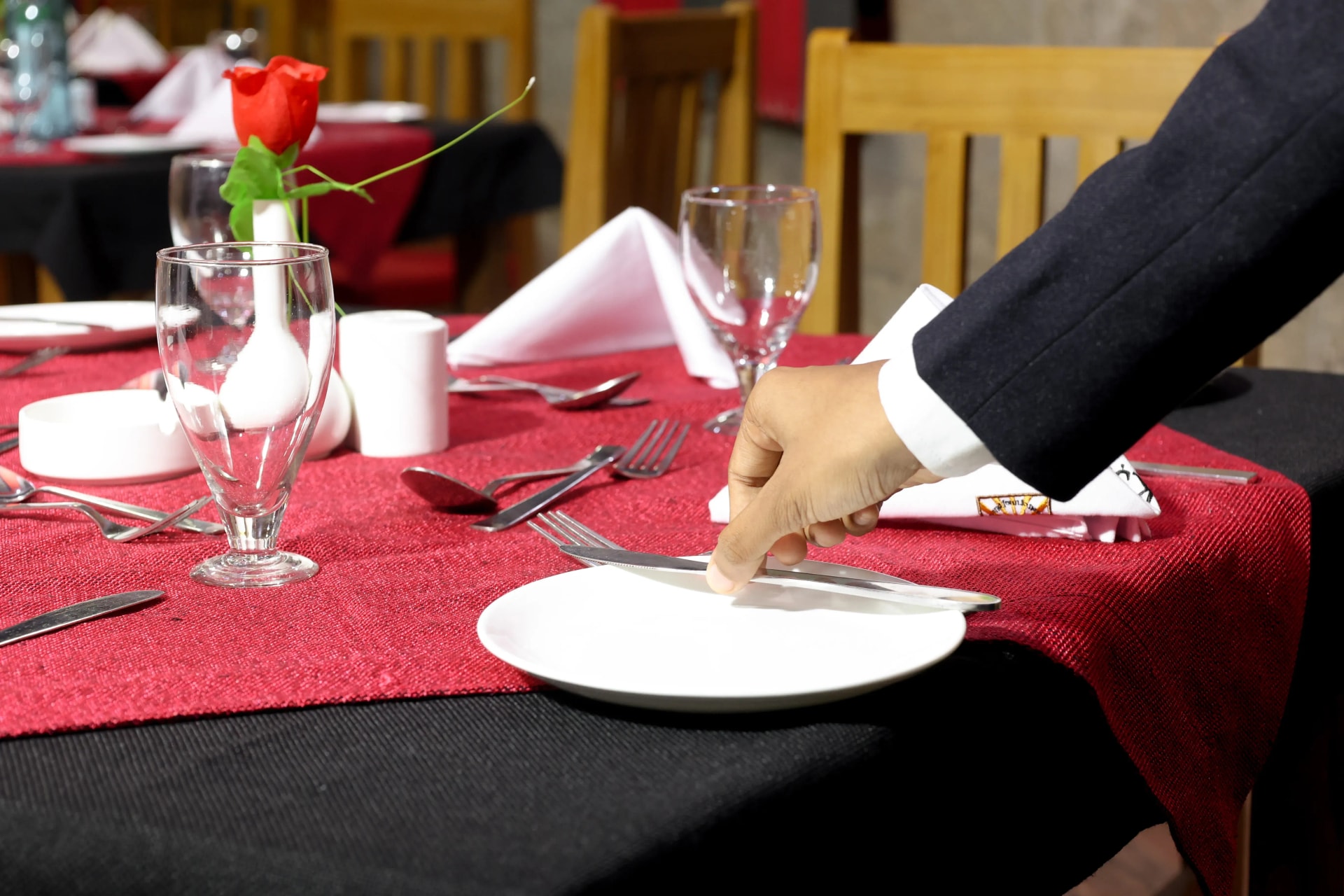
From the outset, students are immersed in the essential elements of food and beverage service. They learn the art of arranging tables according to various formats, be it à la carte, table d’hôte, or buffet. They develop competence in the service of beverages, from the simple offering of water to the careful preparation and presentation of mocktails, tea, and coffee. Each task is approached not as a routine, but as a skill to be mastered, refined, and delivered with precision.
Equally important is the exposure to professional service styles followed across the globe. Students are introduced to American (pre-plated), French (gueridon), Russian (silver), English (host-led), and buffet services—each with its distinct approach to interaction, presentation, and guest satisfaction. These methods are not just taught, but performed, allowing learners to internalize service patterns and adapt their techniques with confidence.
The training also extends to the finer technical aspects of service. Students become familiar with identifying various types of glassware, handling basic mixology, maintaining bar hygiene, and setting up a bar for efficient workflow. Alongside this, they are guided through key soft skills such as order taking, guest communication, upselling, and operating point-of-sale systems—skills that are crucial in ensuring smooth front-of-house operations.
What gives the space its real-world relevance is its direct connection to the training kitchen. This layout mirrors the structure of actual hotel restaurants, where timing and coordination between kitchen and service teams are critical. Working in this interconnected setup, students develop an instinct for time management, teamwork, and service flow—essentials that cannot be taught through theory alone.
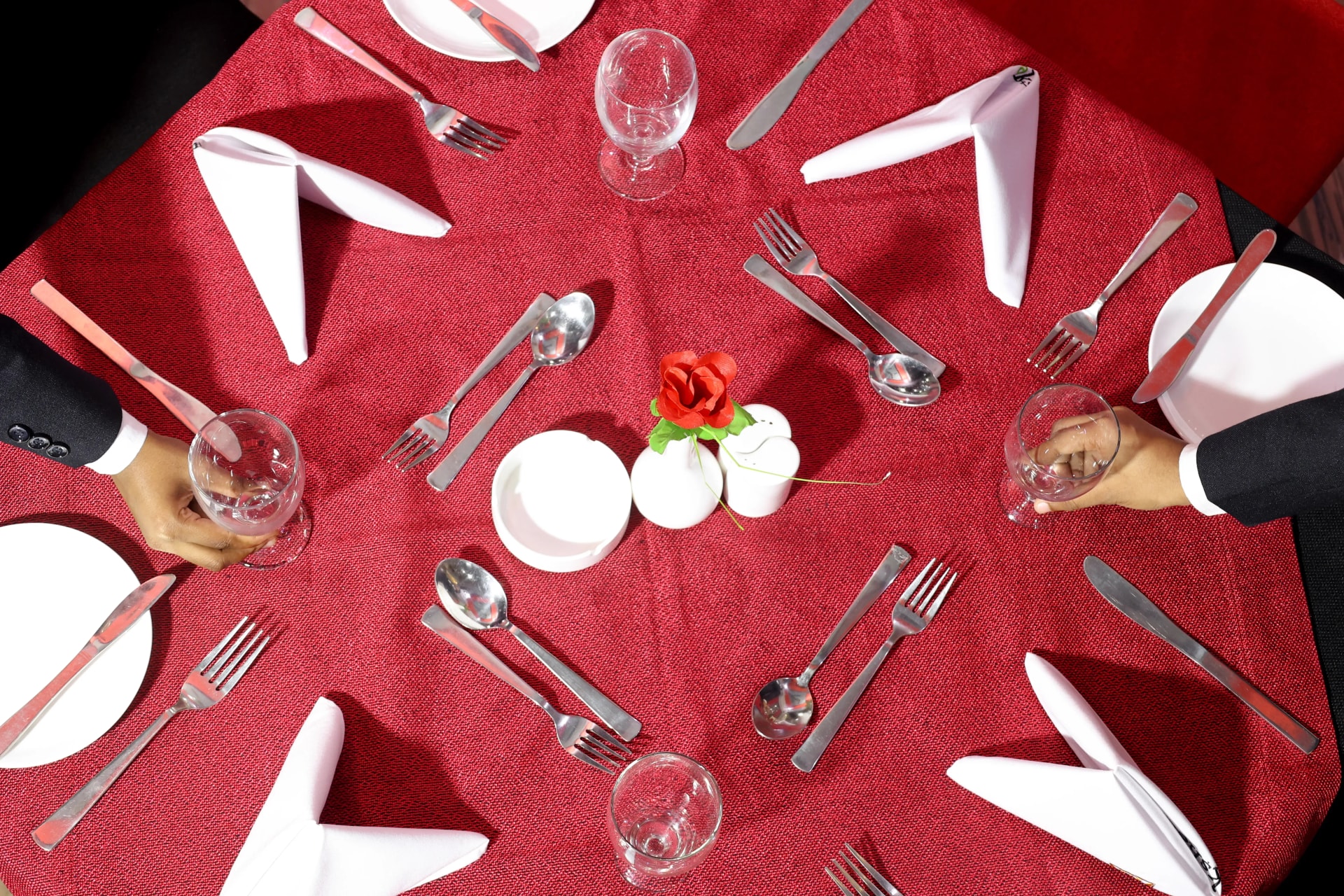
The restaurant becomes a place where attention to detail is second nature. Napkin folds are crafted with intent, table settings are executed with care, and every movement during service follows a practiced sequence. Students also gain early exposure to menu planning, food and beverage pairing, and maintaining appropriate guest etiquette—developing not just their technical skillset, but also the temperament and attitude required to work in refined hospitality spaces.
In this environment, learning becomes tangible. It’s not about rehearsing for an exam; it’s about preparing for a profession. Every plate served, every table cleared, and every guest interaction is part of the larger training process—shaping students into thoughtful, capable, and confident professionals, ready to carry the standards of fine service into the global hospitality industry.